ADSimulator – Explanation
1. What is ADSimulator ?
ADSimulator is a tool that generates synthetic Active Directory environments as graphs.
- It creates a realistic but fake Active Directory
- It stores the data in Neo4j
- It simulates:
- Users
- Groups
- Computers
- Permissions
- Vulnerabilities
ADSimulator - Explanation
1. What ADSimulator Is
ADSimulator is a tool that generates synthetic Active Directory environments as graphs.
It creates a realistic but artificial Active Directory, designed for experimentation and analysis.
It:
- Generates users, groups, computers, and permissions
- Injects vulnerabilities into the environment
- Stores the resulting graph in Neo4j
The goal is to reproduce a realistic AD environment to simulate attacks and support cybersecurity research.
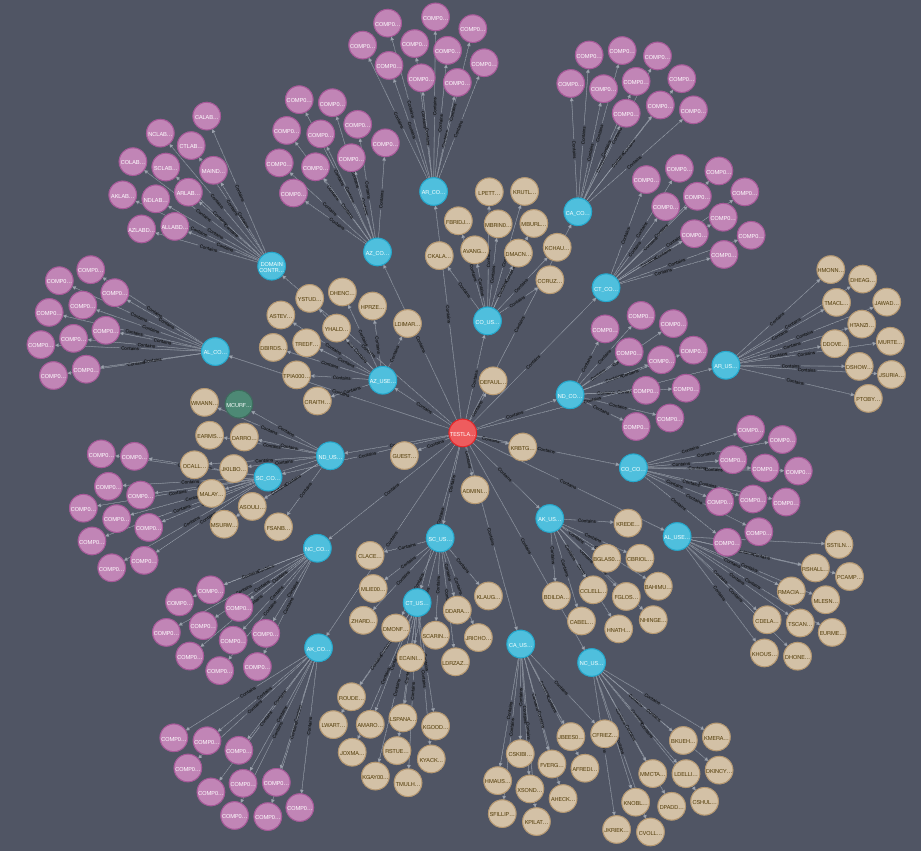
2. Core Concept: Graph-Based Modeling
ADSimulator represents Active Directory as a graph structure, where:
Nodes represent:
- Domains
- Organizational Units (OU)
- Users
- Groups
- Computers
- GPOs
Relationships represent:
MemberOf→ group membershipAdminTo→ local admin rightsHasSession→ active sessionTrustedBy→ trust relationshipsContains→ AD hierarchyACLs→ critical permissions (GenericAll,WriteDacl, etc.)
This structure is aligned with BloodHound’s data model, making it intuitive for attack path analysis.
3. Key Features
a) Configurable Environment Generation
ADSimulator allows full control over the generated environment:
- Number of users, groups, and computers
- AD structure (OUs, GPOs, trust relationships)
- Operating systems
- Security policies
Example:
- nUsers = 1000
- nComputers = 500
- nOUs = 200
b) Vulnerability Injection
You can deliberately introduce security weaknesses to simulate real-world misconfigurations:
- Misconfigured ACLs (
GenericAll,WriteDacl) - Kerberos weaknesses (e.g., no pre-authentication)
- Weak or missing passwords
- Unsafe delegation settings
This allows you to generate a secure environment or a highly vulnerable one.
c) Probabilistic Modeling
Many properties are defined using probabilities, enabling realistic distributions.
Examples:
- 20% of users have an SPN → Kerberoasting possible
- 10% have passwordnotreqd
- 5% have unconstrained delegation
This enables:
- More realistic simulations
- Statistical analysis of attack paths
4. Workflow
Typical usage:
- Define a configuration file (JSON)
- Run ADSimulator
- The tool:
- Generates the graph
- Loads it into Neo4j
- Analyze the environment using:
- Cypher queries
- Graph-based tools (e.g., BloodHound-style analysis)
5. Main Use Cases
A. Cybersecurity Research
- Study attack paths
- Evaluate privilege escalation strategies
B. Attack Simulation
- Kerberoasting
- DCSync
- ACL abuse
C. Defense Optimization
- Identify critical nodes
- Test mitigation strategies
6. Relevance for Graph-Based Security Models
ADSimulator is particularly useful for:
- Building realistic graph datasets
- Testing attack path algorithms
- Applying probabilistic models (e.g., Markov chains)
It provides:
- Structured graph data
- Realistic vulnerability distributions
- A controlled experimental environment
7. Summary
ADSimulator is a graph-based Active Directory generator with probabilistic vulnerabilities, designed to simulate and analyze cyberattacks.
It:
- Generates realistic AD environments
- Models permissions and relationships as a graph
- Injects vulnerabilities using probabilities
- Enables attack simulation and security analysis